



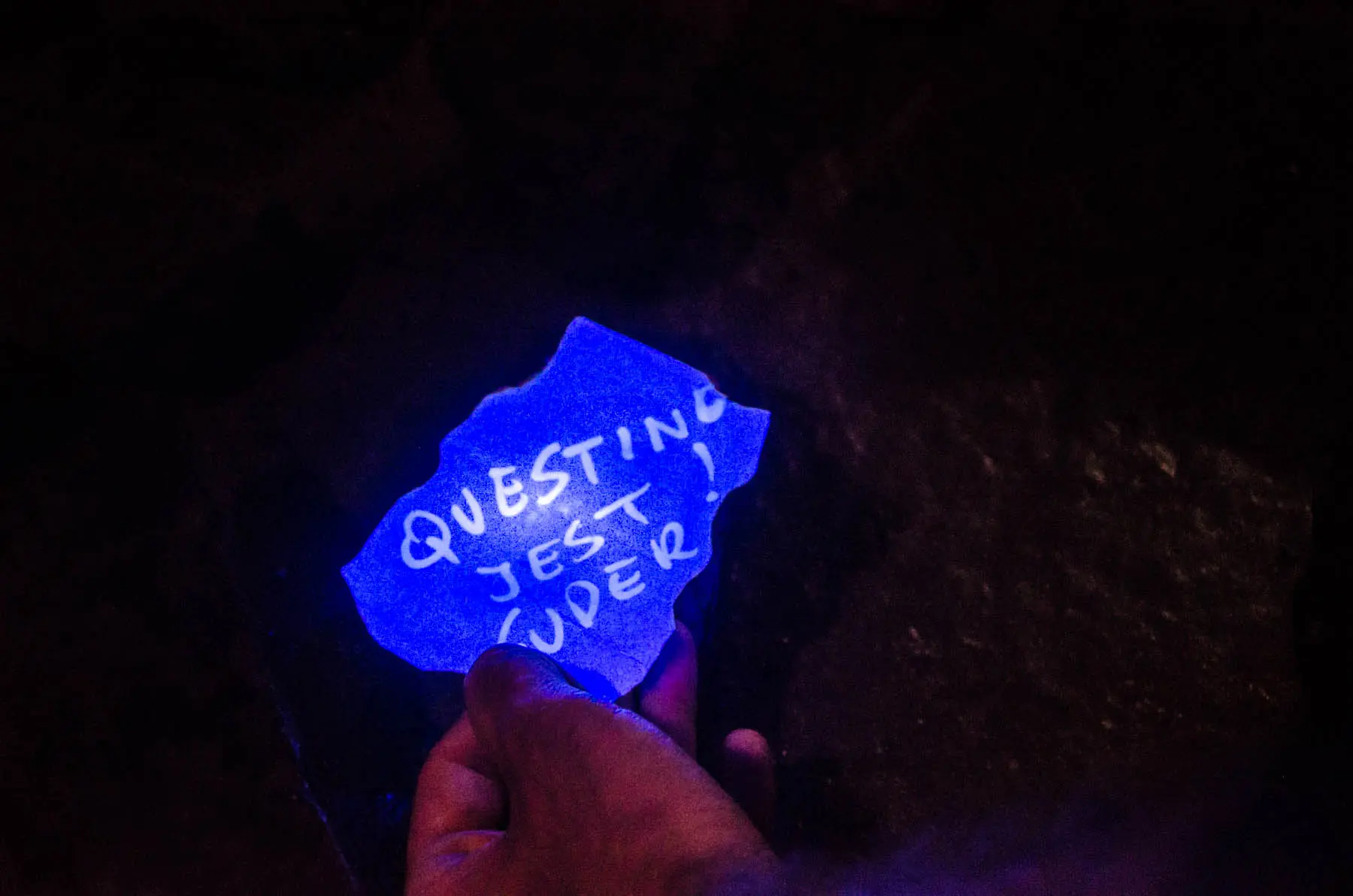
Questing is everywhere… but have you ever wondered what a quest is? Questing (also known as discovery expeditions and treasure hunts) is an educational field game that allows you to discover local cultural, historical, or natural heritage. It involves creating unmarked educational and tourist trails in the field, which help promote a given area, facility, or company. A completed quest is usually presented in the form of a double-sided leaflet with rhymed text. Clues and riddles hidden in the rhyming text help you find and complete the route, leading you to the treasure. Thanks to the game's unattended nature, the trails are accessible year-round, regardless of weather, time of day, or season. A huge advantage of this form of tourism is the ability to independently explore a given area with any number of people at once. The quest trails can be used by various groups of tourists and visitors – individual tourists, families with children, teachers, school children and youth, hiking, cycling and even kayaking.

QUESTING HISTORY
"The best quests capture the spirit of a place. However, we can only find the spirit of a place through our own experience. If we want to find the spirit of a place, we must learn, notice the details, and uncover the hidden stories." [1]
Delia Clark, Steven Glazer
The origins of questing date back to the 90s. The first questing trails were created as part of the " Valley Quest " regional education program in the Connecticut River Valley in Vermont. Its initiators were Delia Clark and Steven Glazer. In Poland, questing trails have been created on a larger scale since 2011. A similar form of field game can be found earlier in the British tradition of "letterboxing," which dates back to 1854. Letterboxing is a contemporary type of field game based on the principles of orientation and solving puzzles that allow the discovery of hidden caches (letterboxes) [Clark, Glazer, 2004, p. 17]. Geocaching also has similar assumptions. Geocaching is a form of field game involving the search for hidden caches using GPS coordinates. These are boxes containing the conquerors' diary (so-called logbook) and often small items that can be taken and left something in return.
Fun, Education, Emotions
Questing as a form of sightseeing and a method used in regional education is created in line with the trend present in contemporary tourism – 3xE (entertainment, education, emotion).
GAME
Questing is a fun activity for all ages. It combines elements of scout scavenger hunts, field games, and new technologies. Using the clues provided in the quest text, tourists become treasure hunters, with the goal of uncovering cultural riches, forgotten secrets, and history.
EDUCATION
Tourist and educational functions intertwine, and the trails themselves are an excellent example of efforts to develop and popularize cultural tourism. Every region or city boasts something that sets it apart. Here and there, it's an incredible legend, sometimes unique landscape features, or unusual fauna and flora. All these elements create the identity of the places to which they belong. Questing is a tool that allows us to recognize this uniqueness.
EMOTIONS
Thanks to intriguing clues, completing the trail presents a challenge for visitors. The possibility of finding the hidden treasure at the end further motivates and incites action. The questing stimulates our imagination, and the plot and story I describe provide exciting entertainment.

QUESTING – why and for whom?
Questing is an innovative solution aimed at developing cultural tourism. It promotes the promotion of cities (especially smaller ones), rural areas, and National Parks by creating a tourism product based on the charm and cultural heritage of these locations. Questing also works well for museums, open-air museums, and galleries, as it allows for independent tours according to the guidelines adopted when creating the trail. In large cities that are already well-known tourist destinations, Questing trails offer the opportunity to attract tourists to lesser-known sites and places of cultural and historical value.
Nowadays, questing is becoming more and more popular among companies… but that’s a completely different story 🙂
Text sources:
http://www.turystykakulturowa.org/
https://pl.wikipedia.org/wiki/Questing
[1] Clark D., Glazer S., 2004, Questing. A Guide to Creating Community Treasure Hunts, University Press of New England, Lebanon, p. 27.