Offsite Mission – Precision Work
As Counterintelligence Agents, you have just 90 minutes to decipher the codes, assemble a military radio station, and intercept…

A shared mission and a team dedicated to cracking codes from the first puzzle to the last.
For 10–500+ people across Poland. Events that transform participants into heroes of history.
Free quote within 24 hours
Check out the TOP scenarios of our puzzle boxes

As Counterintelligence Agents, you have just 90 minutes to decipher the codes, assemble a military radio station, and intercept…

Your goal is to disarm a mysterious chest that hides a series of intriguing puzzles and surprising mechanisms!
For teams that enjoy intellectual challenges, time pressure, and the satisfaction of discovering new secrets.
Company integration
A shared mission, excitement and a loud "We got it!" after each broken code.
Training with a trainer
Training in cooperation, communication and unconventional thinking.
Bachelor party
Instead of another paintball - secret codes, ciphers and a mission worthy of a special unit!
Pre-mission briefing
The coordinator, in the role of General, divides you into 6-8-person teams, presents the operational situation and the principles of the mission.
You are starting the operation!
As Counterintelligence Agents, you break codes, decode messages, and obtain codes that unlock further security measures.
A series of multi-level puzzles
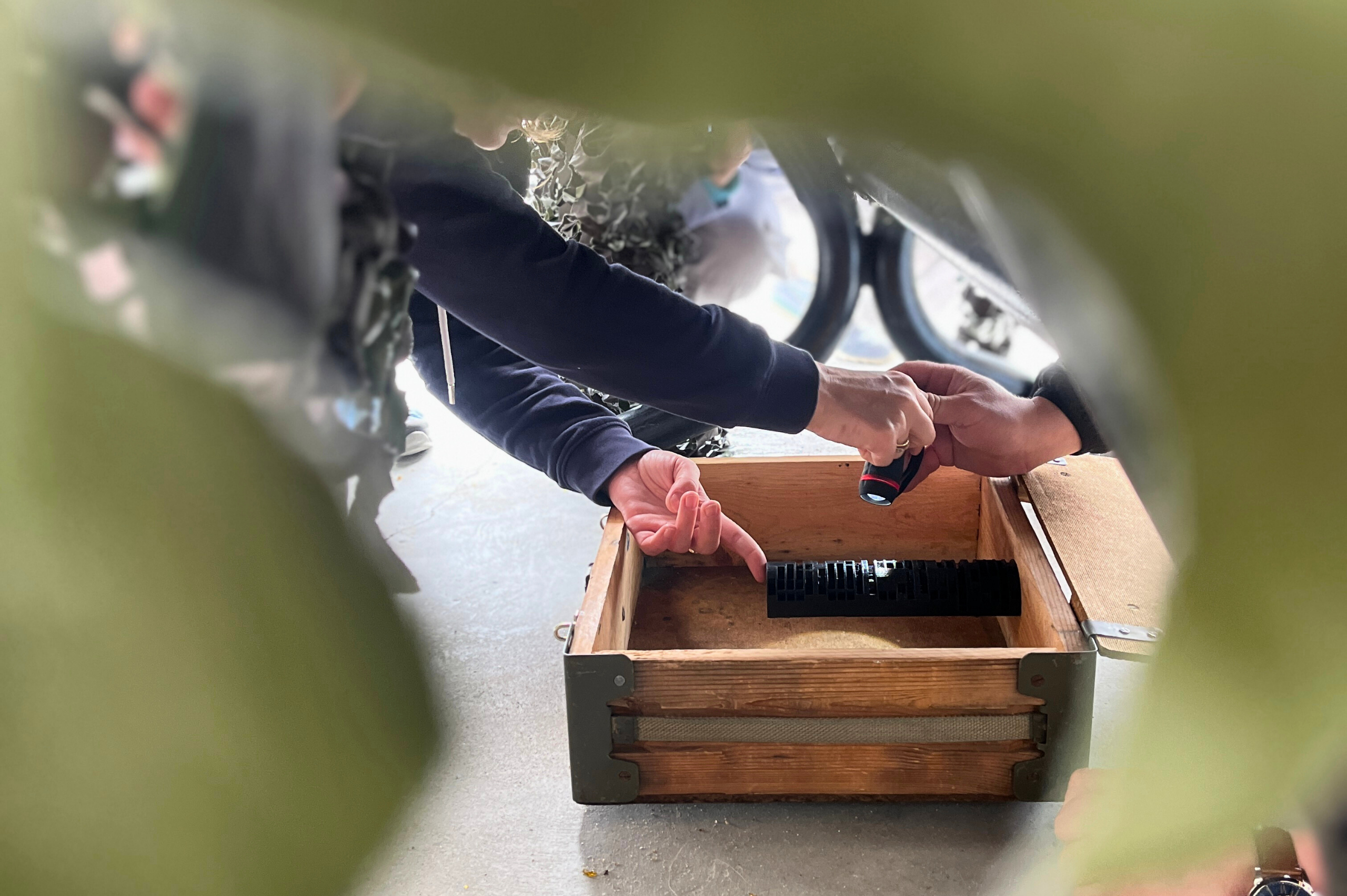
QR codes, Morse code, UV light, 3D mazes, maps, a beam of light or an electronic switchboard – each solution leads to the next stage of the mission.
You are intercepting a secret message
The acquired elements allow you to assemble a military radio station, intercept an encrypted message and successfully complete the mission.
Finale of the operation
In the competitive mode, the time it takes to complete the mission counts, while in the team-based mode, it's the combination of acquired codes and a shared finale. Prizes, eternal glory, and… a 3-second visual approval from the General await the winners!

We offer scenarios for groups of 10 to 120 participants. Up to 15 teams can compete simultaneously , making the Puzzle Box perfect for both small-scale team-building activities and larger corporate events. The most exciting experiences are offered by teams of 6 to 8 people . This size allows everyone to actively participate in solving puzzles and making decisions.
Of course, we personalize games to meet specific needs. We can tailor the storyline, tasks, and game elements to the nature of the event, brand, anniversary, or meeting objective. We can also include company merchandise, promotional materials, or visual identity elements in the boxes. We provide pricing for dedicated integration options after thoroughly understanding your expectations.
The game is perfect for hotels, offices, restaurants, conference rooms , and outdoor events . In case of rain, the game can easily be moved indoors. A small space and a table for each team are all you need.
Yes. We produce all scripts in both Polish and English for international teams, at no additional charge.
Yes. Behind the final puzzle, we can hide a prize prepared by the organizer—for example, a voucher, commemorative gadget, or a gift for the winning team. This makes the game's finale even more exciting.
Yes. All teams receive identical Puzzle Boxes and face the same challenges. Victory is determined by efficiency, cooperation, and time to complete the mission.
No. This is a stationary tabletop game, so it's perfect for teams who prefer to work together on puzzles without moving around.
Yes. In addition to preparing the crates, we also take care of the space's décor, music, and makeup for the coordinators and actors, tailoring everything to the event's storyline.
No. We design and build all our Puzzle Boxes ourselves. This allows us to utilize proprietary mechanisms, 3D-printed and laser-cut components, and solutions created specifically for our scenarios.
Phone:
+48 603 683 869
The Puzzle Box is a mobile chest filled with codes and hidden mechanisms, where solving one puzzle unlocks the next. A full 60-90-minute game for a team of 6-8 players can fit on a single table.
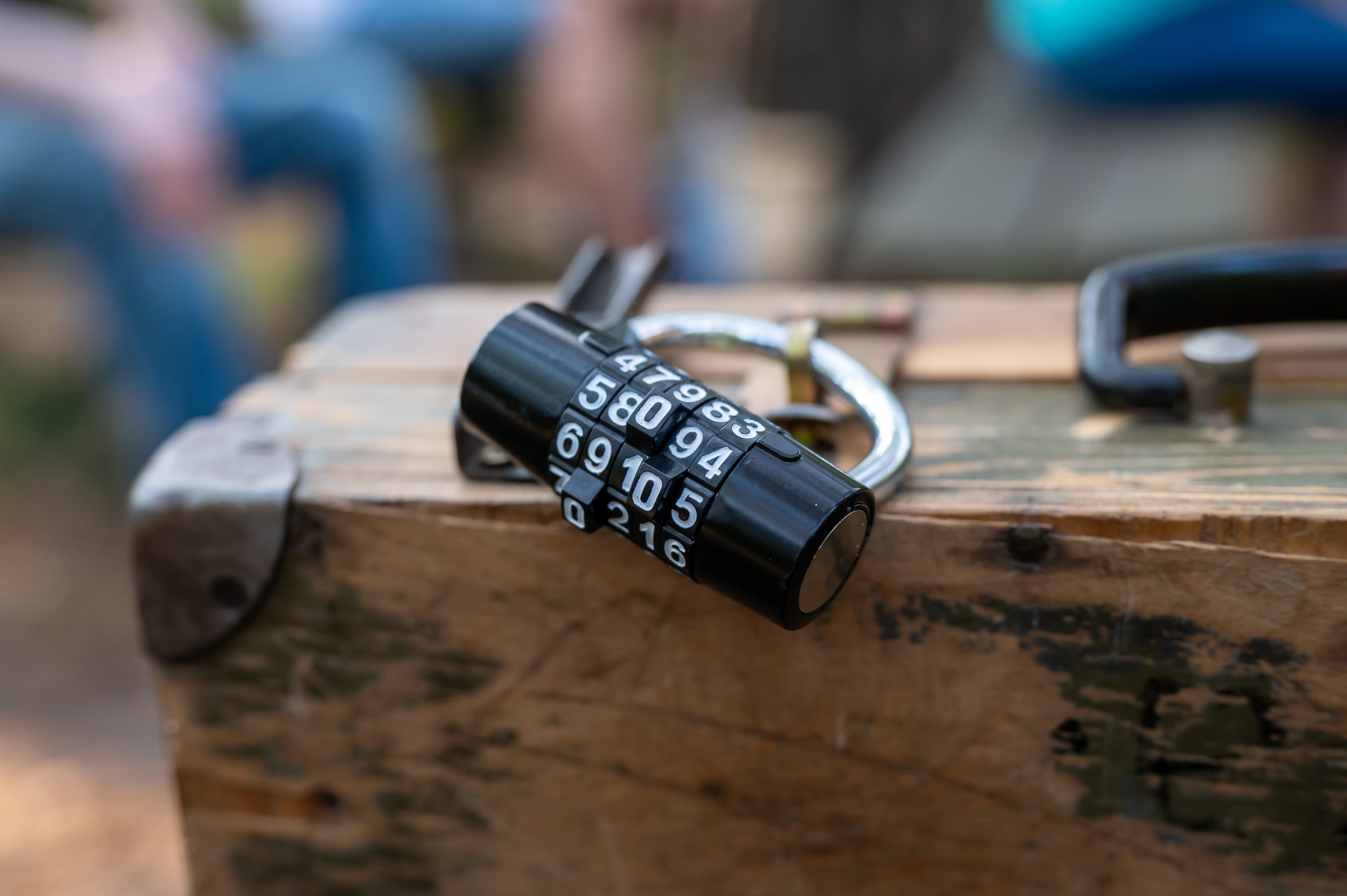
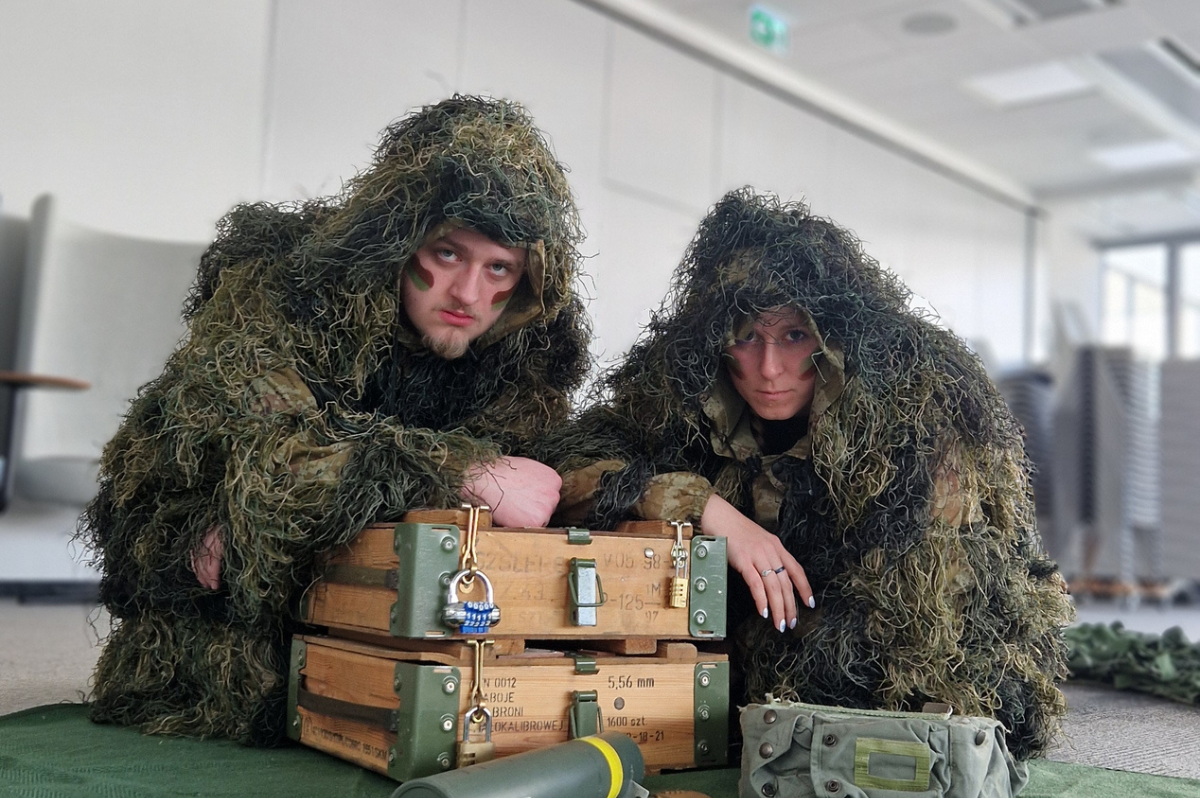
In this type of gameplay, you don't need a separate room or space to move between locations. The chests, military tubes, hidden compartments, and mechanisms needed to complete your mission are all within easy reach —you just need to figure out how to access them.
Small space requirements and quick assembly allow you to easily incorporate the Puzzle Box into your event program at a hotel, office, restaurant, conference room or outdoors.
In one game, participants face Morse code, QR codes, maps, color-based ciphers, UV light, 3D mazes, light beams, and electronic switchboards.
One clue must be read, another found, something calculated, connected, properly set or activated.
The Puzzle Box requires perceptiveness, patience, logical thinking, manual skills, spatial imagination, associating facts and looking for non-obvious solutions.
It is a multi-level structure in which each completed stage gives immediate satisfaction from solving a problem, but at the same time opens the way to further challenges.
When one approach fails, you need to go back to your previous assumptions, look for a new lead, or look at the problem from a completely different perspective.
This means the Puzzle Box tests not just one skill but many different approaches to solving the puzzle, challenging the team to think when they get stuck on a particular cipher. Cooperation isn't just a bonus , but a necessary element to complete the mission.
Puzzle Box is a solution for teams who prefer a more in-person format. Participants don't traverse the city or forest like in urban and field games , nor do they interrogate witnesses like in investigative role-playing games.
Instead, they analyze clues, crack codes, tinker with mechanisms, and work together to find solutions. You don't have to be the most aggressive person at the table to play an important role on the team.
The coordinator takes on the role of General or Commander , introducing participants to the story, explaining the rules, and overseeing the mission. If the team gets stuck, they can guide them back on track without sacrificing the satisfaction of solving the problem on their own.
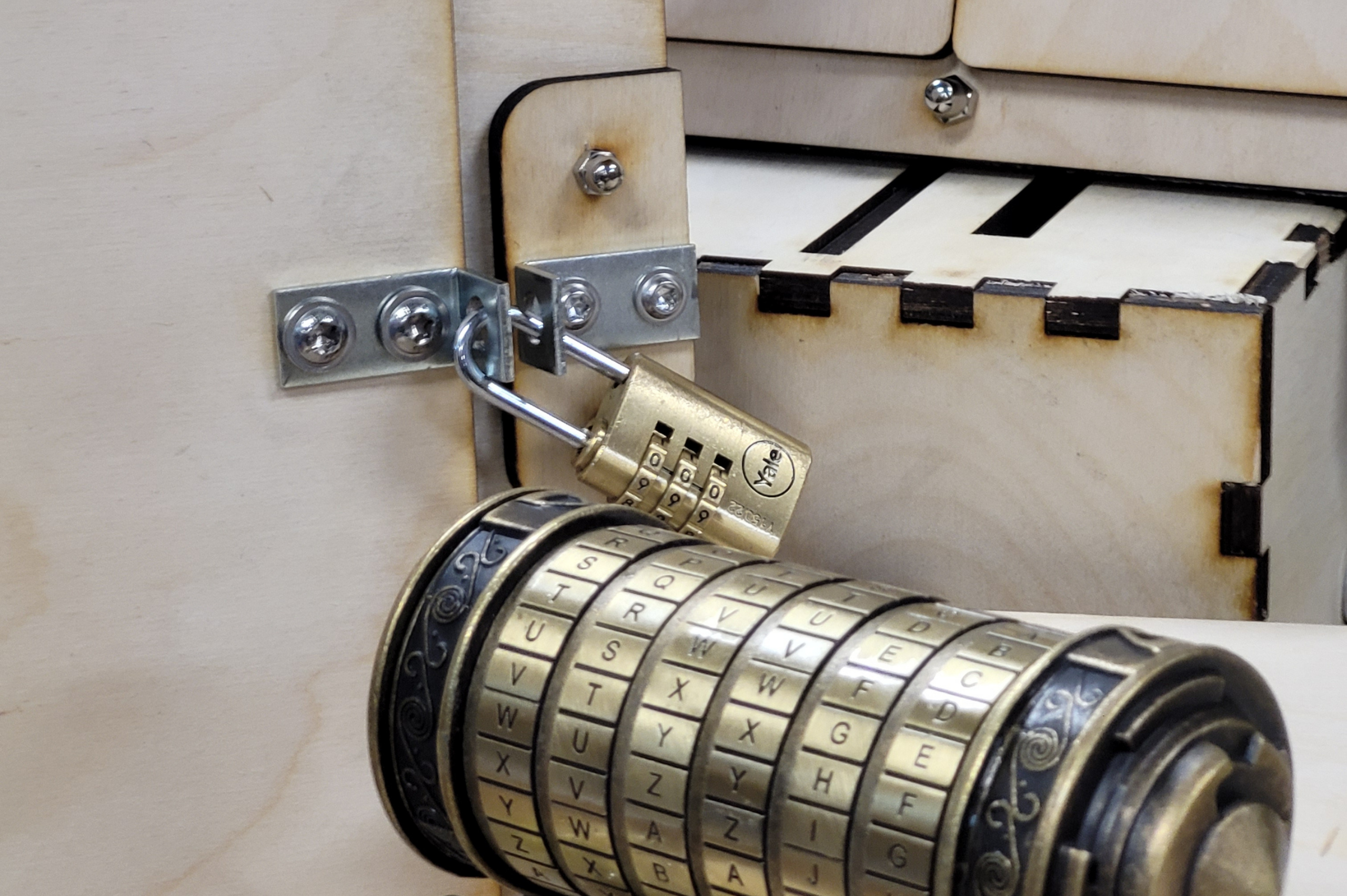
We design and build our own puzzle boxes , utilizing technologies such as 3D printing, electronics, laser cutting and engraving. This allows us to create our own 3D mazes, electronic circuits, manual mechanisms, and light-based puzzles , rather than limiting gameplay to padlocks and classic ciphers.
In the competitive mode, teams compete for the best time, with the total score determining victory. In the integrated mode , teams acquire various codes during the game, which they must combine in the final round to complete the final task and complete the mission. Depending on the scenario, teams defuse a bomb, assemble a radio station, or intercept classified information from foreign intelligence.

The puzzle box works particularly well in conjunction with a trainer-led workshop because it presents the team with a series of different problems to which the participants do not know the answers.
The trainer observes how participants exchange information, propose solutions, divide tasks, listen to others, react to failures and change strategies when the current course of action proves ineffective.
With multi-level puzzles, it's especially clear what happens when a team gets stuck: whether participants repeat the same attempts, whether they can take a step back, verify previous assumptions, brainstorm, and open themselves to other perspectives.
After the match, the coach discusses specific situations that occurred during the mission. This ensures that discussions about cooperation and communication relate to real-world team behaviors rather than abstract examples.
After the game is over, you can talk not about how the team should work together , but how they did it in practice – when time was of the essence, different ideas emerged, and the first solution did not always turn out to be the right one.